In compliance with current regulations, let us know which audience you belong to:
Blepharoplasty
Blepharoplasty consists of an eyelid surgery with the aim of reducing excess skin and orbital fat around the eyelids, which can make the eye look older and even reduce vision.
One of the most frequent postoperative complications of this surgery is dry eye, especially if the patient experienced dry eye symptoms before.
Suggested Protocol
Legend
Single usage
Joint usage
| Application | No. Sittings/Sessions | Frequency | ||||
|---|---|---|---|---|---|---|
| DAYS APART, UNLESS SPECIFIED | ||||||
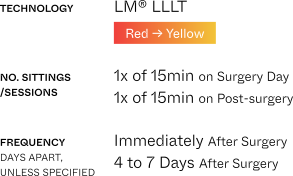
| ApplicationBlepharoplasty | Technology | LM® LLLT |
Red → Yellow Blue |
Recommended Protocol > No. Sittings/Sessions 1x on Surgery Day of 15min | > Frequency Immediately After Surgery | |
| Technology |
Red
Blue
Yellow
|
Recommended Protocol > No. Sittings/Sessions 1x on Post-surgery of 15min | > Frequency 4 to 7 Days After Surgery | |||
Application
> Blepharoplasty
Scientific Coverage
“After blepharoplasty, complications such as infection, dry eyes, and bruising can occur, sometimes extending to the lower eyelid. The most significant issue, however, is the patient's dissatisfaction with the results, often due to delayed resolution of common problems like edema or hematoma.
Postoperative treatments with LM® LLLT aim to minimize eyelid swelling and reduce bruising by promoting vasodilation at the lymphatic level, which helps improve circulation and speeds up the reduction of edema, enhancing recovery after surgery.
Ioana Romero, MD
SEO Congress, Madrid, 2019